The Man Behind the Magic: How Don Antonio Built an Entertainment Empire That Still Echoes Through LA
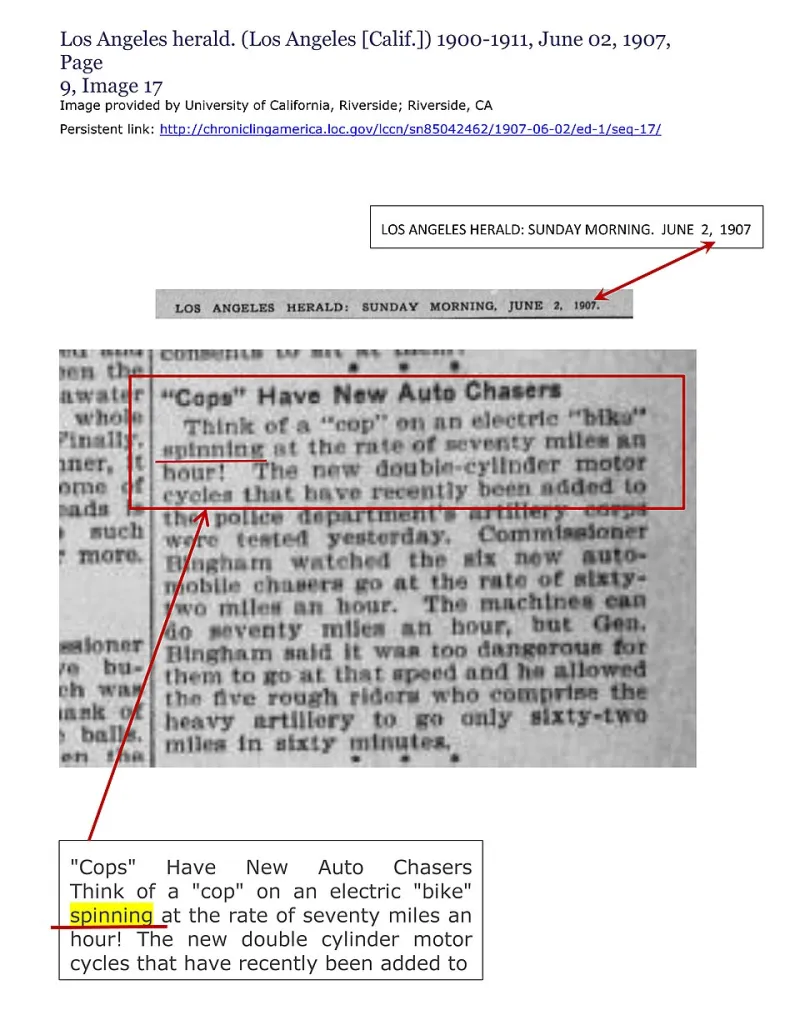
Photo: Kolektiv autorů, Public domain, via Wikimedia Commons
Los Angeles has always been a city of reinvention. It chews up ordinary ideas and spits out legends. But every now and then, one person comes along who doesn't just ride the wave — they figure out how to make the ocean itself move differently. Don Antonio was that kind of person.
He wasn't just a promoter, a producer, or a performer. He was all of those things at once, and somehow more than the sum of his parts. To understand what made Don Antonio tick, you have to understand the Los Angeles he walked into — a sprawling, sun-drenched city that was equal parts ambition and chaos, desperate for someone to give it a cultural center of gravity.
A City Looking for Its Voice
In the mid-twentieth century, LA's entertainment scene was fragmentary at best. Hollywood had the movies locked down, sure. But theater, live music, and grassroots cultural expression? Those were scattered like broken glass across the basin, brilliant in pieces but disconnected. Neighborhoods like Boyle Heights, Leimert Park, and Echo Park each had their own pulse, their own traditions, their own sounds. What they didn't have was a unifying force — someone who could walk between those worlds without losing credibility in any of them.
Enter Don Antonio.
He grew up immersed in the contradictions that define this city. The son of working-class parents who understood the dignity of labor and the necessity of beauty, he developed an almost instinctive radar for talent. Friends who knew him in his early years describe a man who could walk into any room — a cramped rehearsal space in Inglewood, a rooftop gathering in Silver Lake, a formal theater in downtown LA — and immediately understand what that space needed to become something extraordinary.
"He didn't impose his vision," recalled one longtime collaborator. "He listened first. Always. And then he found the thing that was already trying to happen and just... helped it happen better."
Building the Infrastructure of Dreams
What separated Don Antonio from the flash-in-the-pan impresarios that LA has always attracted was his commitment to infrastructure. He wasn't interested in one-night miracles. He wanted to build something that would outlast the moment.
His earliest ventures were modest by any commercial measure — intimate venues that prioritized acoustics over capacity, performance spaces that doubled as rehearsal studios, community showcases that gave emerging artists a real stage rather than an open mic corner. But the philosophy embedded in those early projects was anything but small.
Don Antonio believed, fundamentally and without apology, that Los Angeles deserved a cultural life as rich and layered as any city on earth. He pushed back against the idea — common in certain circles — that LA was a transactional place, a town where art was merely a stepping stone to something more commercially respectable. For him, the art was the point. The culture was the destination, not the detour.
That conviction translated into practical decisions: booking jazz musicians alongside spoken word artists, pairing classical theater productions with Latin folk performances, creating bills that forced audiences to encounter something they hadn't expected to love. It was curatorial genius disguised as programming, and it quietly rewired how Angelenos thought about what a night out could mean.
The Philosophy That Outlived the Man
Ask any serious student of LA's cultural history about Don Antonio's lasting influence, and you'll hear a version of the same answer: he made people believe that Los Angeles could be taken seriously as a place where culture was created, not just consumed.
That might sound like a small thing. It wasn't. For decades, the prevailing narrative — fed in part by East Coast cultural gatekeepers — positioned LA as a glamorous but shallow place, a city of surfaces. Don Antonio fought that narrative not with arguments but with evidence. Every performance he curated, every artist he championed, every cross-cultural collaboration he facilitated was a data point against the dismissal.
The artists who came up in his orbit absorbed that defiance. They carried it into their own work, their own spaces, their own relationships with the city. The ethos spread the way good ideas tend to — quietly, through imitation and inspiration, until it became part of the air.
Today, when you see a young musician in Koreatown blending traditional Korean instrumentation with hip-hop production, or a theater company in Compton staging a production that draws equally from Chicano muralism and Shakespearean structure, you're watching Don Antonio's philosophy in action. They may not know his name. But they're working from his blueprint.
Why It Still Matters
Los Angeles in the twenty-first century faces a version of the same challenge it faced when Don Antonio first arrived on the scene. The city is bigger, louder, and more connected to global culture than ever before. But the fundamental question — how do you build something that lasts in a place that's always racing toward the next new thing — remains as urgent as it ever was.
The answer Don Antonio gave, and kept giving throughout his life, is worth sitting with. It wasn't about chasing trends or manufacturing moments. It was about creating conditions — spaces, relationships, opportunities — where genuine creativity could take root and survive long enough to matter.
That's not a nostalgic idea. It's a radical one. And in a city that sometimes forgets its own history faster than it can make it, keeping Don Antonio's story alive isn't just an act of remembrance. It's an act of resistance.
So here at Don Antonio's LA, we're not just celebrating a legacy. We're carrying it forward — one story, one artist, one unforgettable night at a time.
Because in this city, the legends don't retire. They just change form.