Inside the Booth: The Studio Secrets That Made Don Antonio LA's Most Influential Musical Architect
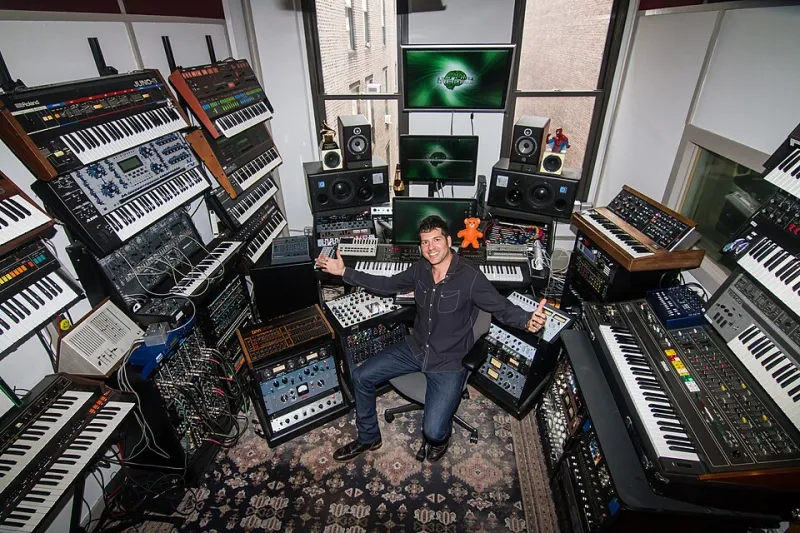
Photo: Strangecranium, CC BY-SA 4.0, via Wikimedia Commons
There's a particular kind of silence that settles over a recording booth right before something extraordinary happens. Engineers who worked alongside Don Antonio describe it the same way, almost to a word — a held breath, a stillness, and then a moment that changed everything about how they understood what music-making could be.
For decades, Don Antonio's studio sessions were the stuff of quiet legend in Los Angeles. Not loud legend. Not the kind that gets splashed across trade magazines or celebrated at industry galas. The quieter, more durable kind — the kind that gets passed down in whispers between a veteran producer and their newest protégé, the kind that shows up in the instincts of artists who can't quite explain where they learned to trust themselves.
What Don Antonio built inside those sessions wasn't just a catalog of recordings. It was a methodology. And that methodology is still very much alive.
More Than a Producer, Less Than a Therapist — Exactly What Was Needed
The conventional wisdom about record producers, even today, tends to fall into one of two camps: the technical wizard who shapes sound, or the executive type who shapes careers. Don Antonio refused to be either, or rather, he insisted on being both — and then some.
Engineers who worked his sessions recall a man who spent as much time listening as directing. He had a habit of letting a take run long past what most producers would consider useful, not because he was indecisive, but because he was watching. Watching how an artist held their body when they thought no one was paying close attention. Watching where the hesitation lived — in the phrasing, in the breath, in the split second before a performer committed to a note.
"He'd let you find the wall yourself," recalled one veteran session musician who spent years in Don Antonio's orbit. "He wasn't going to tell you where it was. He wanted you to walk into it, feel it, and then figure out how to get through it on your own terms."
That philosophy — patient, observational, fundamentally respectful of an artist's individual process — ran counter to the more transactional energy that dominated LA's studio culture at the time. And it worked precisely because it was different.
The Architecture of a Session
What made Don Antonio's approach so distinctive wasn't any single technique. It was the cumulative structure of how he designed a session from start to finish.
He rarely began with the song. Instead, early sessions with a new artist were almost deliberately aimless — long stretches of informal playing, conversation, sometimes just the ambient noise of people settling into a space together. To outside observers, it might have looked like wasted time. To Don Antonio, it was essential data collection.
By the time he actually started recording, he'd already mapped the terrain of who he was working with. He knew which artists needed silence to find their confidence and which ones needed noise. He knew who was performing for the room and who was performing for something deeper and harder to name. He adjusted everything — microphone placement, lighting, the energy of the people present in the booth — based on what each individual artist actually needed, not what the industry assumed they should need.
Producers who've studied his methods in the years since often point to this personalization as the hardest thing to replicate. "You can copy the technique," one contemporary LA producer noted, "but you can't copy the attention. That's what he was really offering. Genuine, unhurried attention."
When the Mistakes Became the Material
One of the most talked-about elements of Don Antonio's studio philosophy was his relationship with imperfection. In an era when the pursuit of the clean take dominated recording culture, he was famously unbothered by mistakes — or rather, he was famously interested in them.
Archival recordings from his sessions, some of which have been studied by music historians piecing together his legacy, reveal a pattern: Don Antonio had a habit of circling back to moments that other producers would have edited out entirely. A cracked note. A stumbled lyric. A beat that landed just slightly off the grid. Rather than treating these as problems to be corrected, he'd bring them into the room for discussion.
What was happening in that moment? What was the artist feeling when they lost their footing? Was the mistake actually a door to something more honest than the polished version?
Sometimes the answer was no, and they'd move on. But often enough, those conversations unlocked something — a different understanding of the song, a more vulnerable approach to the performance, a willingness to stop hiding behind technical precision.
"He used to say that a perfect take tells you what an artist can do," one engineer remembered. "But an honest take tells you who they are."
The Ripple Effect Across LA's Creative Community
The artists who came through Don Antonio's sessions didn't just leave with recordings. They left with a different understanding of their own creative process — and many of them carried that understanding directly into their own work as mentors, producers, and collaborators.
This is where the legacy gets genuinely interesting, because it's not a straight line. It's more like the way a stone disturbs water, with each ring moving outward and generating its own smaller rings in turn. The musicians who learned patience and self-observation from Don Antonio taught those same values to the artists they later worked with. The engineers who absorbed his philosophy about attention and personalization built studios and session cultures that reflected it.
Today, if you spend time in certain corners of LA's music scene — particularly in the independent and mid-level spaces where artist development actually happens, away from the corporate machinery — you can still feel the influence. A producer who gives a new artist three sessions before touching the recording equipment. A session structure that starts with conversation instead of sound checks. A culture that treats the mistake as information rather than failure.
None of these people may know Don Antonio's name. But they're working from his blueprint.
What the Modern Industry Still Gets Wrong
For all the talk about artist development in today's music business, the honest truth is that most of what gets called development is actually marketing — figuring out how to package and position an artist for maximum commercial impact. Don Antonio's approach was the inverse of that. He started with the person, not the product.
That distinction matters more than it might seem. An artist who's been genuinely developed — who's been pushed to understand their own instincts, confront their own limitations, and build creative confidence from the inside out — carries something into every room they enter that no amount of branding can manufacture.
Don Antonio understood that. He built his studio sessions around it. And the producers, engineers, and artists who were lucky enough to experience those sessions firsthand have spent the years since trying to figure out how to pass it on.
The sound of that mentorship is still echoing through Los Angeles, if you know how to listen for it.