Bend, Don't Break: How Don Antonio Taught LA Artists to Turn Hard Times Into a Second Act
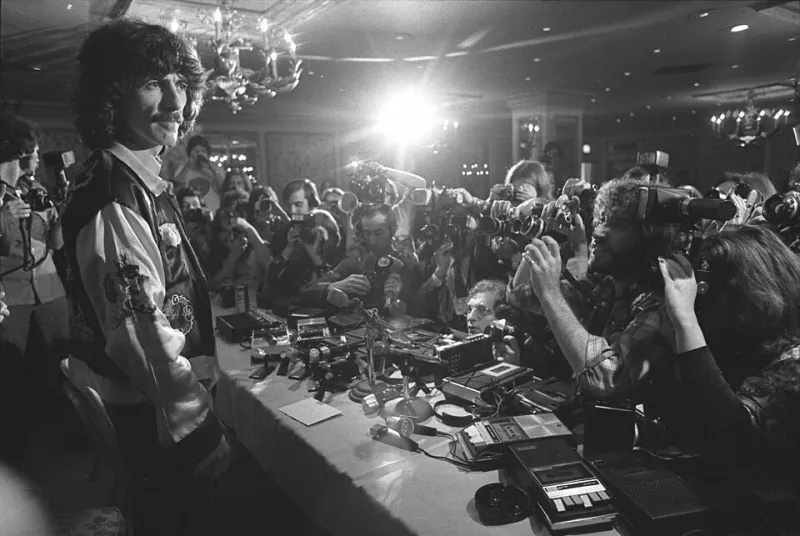
Photo: Tony Barnard, Los Angeles Times, CC BY 4.0, via Wikimedia Commons
Every industry has its winters. The money dries up, the venues go dark, the contracts stop coming, and the phone sits quiet for weeks at a stretch. Los Angeles has lived through more than a few of those stretches — the early-'80s recession that gutted independent labels, the post-strike slowdowns that left working musicians scrambling, the streaming disruption that flipped the entire recorded music economy upside down. Each wave took people out. But a surprising number of the artists who came through those rough patches with their careers not just intact but genuinely transformed had something in common: time spent inside Don Antonio's orbit.
His approach wasn't about bulletproofing anyone against failure. It was something more practical and, honestly, more useful — teaching artists how to stay in motion when the ground shifts beneath them.
When the Industry Catches a Cold, Artists Get Pneumonia
There's an old saying in entertainment that when the industry catches a cold, working artists get pneumonia. The people at the top of the food chain have enough cushion to absorb a downturn. Everyone else is scrambling. Don Antonio understood this dynamic viscerally, and it shaped the way he worked with the performers, musicians, and creators who came through his world.
He wasn't interested in building artists who were dependent on a single format, a single genre, or a single revenue stream. That kind of narrow specialization might work beautifully in a stable market, but it's a liability the moment conditions shift. "He used to say that versatility wasn't a backup plan — it was the plan," recalled one vocalist who worked with him during a particularly lean stretch in the mid-'90s. "He wanted you to be able to walk through multiple doors, not just one."
That philosophy turned out to be more than good advice. It was a survival mechanism.
The Pivot That Saved a Career
Consider the arc of a Los Angeles-based R&B artist — we'll call her Marlena, since she's asked to keep some distance from this story — who came up in the late '80s riding a wave of radio-friendly soul that had real commercial traction. When format changes at major stations and a shift in label priorities left her without a deal in the early '90s, she could have easily become one of the countless artists who simply faded. Instead, she ended up in a series of conversations with Don Antonio that redirected her entire trajectory.
He didn't tell her to chase whatever was trending. He asked her what she actually loved about performance beyond the recording side — what she'd do if no one was paying her. Her answer surprised even her: theater. She'd grown up doing community productions and had quietly missed it. Within two years, with Don Antonio's network opening doors and his coaching sharpening her stage instincts, Marlena had built a second career in LA's theatrical world that outlasted her recording career by decades.
That kind of pivot wasn't accidental. It was the direct result of someone helping her map her own transferable strengths and then pointing her toward the territory where those strengths had room to breathe.
Rewriting the Business Model
Not every reinvention was about switching mediums. Some of the most compelling turnarounds Don Antonio guided were about artists completely rethinking how they made money from what they already did.
During the late-2000s downturn — when digital disruption was tearing through traditional revenue streams and even established artists were watching royalty checks shrink to almost nothing — a group of younger musicians who'd been mentored by Don Antonio began experimenting with direct-to-fan models, live workshop formats, and licensing arrangements that the old industry playbook hadn't really prepared anyone for. The difference between them and their peers who were struggling in the same conditions was a mindset: they'd been trained to think of themselves as creative entrepreneurs, not just performers waiting for an industry to validate them.
Don Antonio had always talked about ownership — of your masters, your brand, your relationships with your audience. In the late '70s and '80s, that was somewhat ahead of its time. By the 2010s, it was the entire conversation. The artists he'd shaped were already fluent in it.
Resilience as a Craft
What's striking, looking back at the careers that Don Antonio touched, is how rarely the reinventions felt desperate. There's a version of pivoting that's just panic — throwing yourself at whatever seems to be working because your back is against the wall. That tends to produce work that audiences can smell from a mile away. The artists Don Antonio mentored seemed to pivot with intention, which made all the difference.
He was deliberate about this. Part of his mentorship involved stress-testing ideas before the stress arrived. He'd push artists to imagine scenarios where their current model failed entirely and ask them what they'd do next — not as an exercise in pessimism, but as a way of making sure they had actual answers. By the time a downturn hit, the thinking had already been done. The plan wasn't being invented in a panic; it was being executed with relative calm.
"He made you do the scary thinking early," one musician put it simply. "So when the scary thing actually happened, it wasn't as scary."
What Modern Artists Can Take From This
The entertainment industry in 2024 is, in many ways, in the middle of another one of those recalibration moments — AI tools disrupting creative workflows, streaming economics continuing to squeeze working musicians, and the live events landscape still finding its footing after years of upheaval. The challenges are new, but the underlying dynamic is familiar.
What Don Antonio modeled, and what the artists he shaped demonstrated repeatedly, is that the performers who come through industry downturns stronger aren't necessarily the most talented ones. They're the ones who've done the internal work — who know their own strengths across multiple contexts, who've built genuine relationships rather than just transactional ones, and who've thought seriously about what they'd do if the floor dropped out.
That's not a guarantee of anything. The entertainment industry doesn't make guarantees. But it's a dramatically better position to be in than waiting for conditions to improve and hoping your moment comes back around.
The Legacy of the Long Game
Don Antonio's imprint on Los Angeles entertainment is visible in a lot of ways — in the venues that carry his influence, in the sounds that trace back to his collaborations, in the artists whose names are now household words in this city. But maybe the most durable part of his legacy is less visible: it lives in the careers that didn't end when they should have, in the second acts that nobody expected, in the artists who looked at a closed door and found a window because someone had taught them to look for one.
LA has always been a city that rewards reinvention. Don Antonio just made sure the artists he worked with were ready for it.