Written in the Margins: What Don Antonio's Handwritten Notes Tell Us About the Mind Behind the Legend
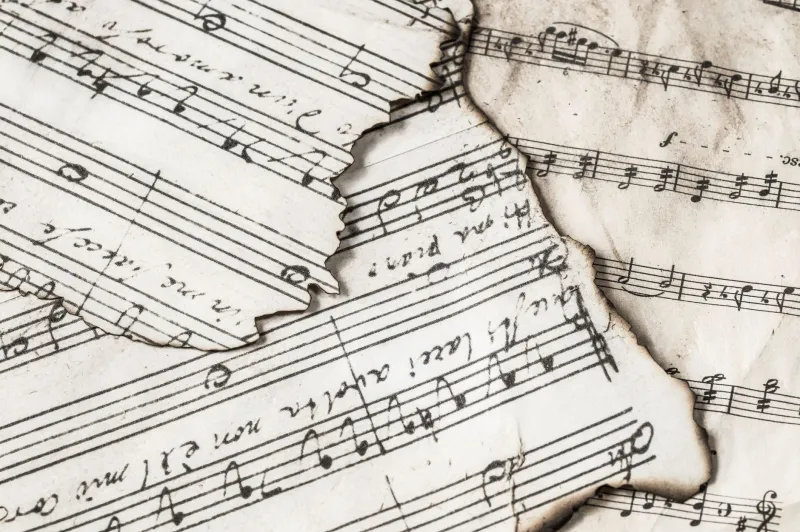
Most people encounter a script and read it straight through. Don Antonio apparently couldn't help himself. He'd work the edges — top, bottom, sideways if he had to — filling every spare inch of white space with arrows, question marks, crossed-out words, phonetic rewrites, and the occasional small sketch of something that looked almost architectural. To the untrained eye, it looked like clutter. To anyone who's spent serious time studying it? It looks like a blueprint.
Over the past few years, a quiet but determined group of LA-based archivists, music scholars, and working artists have been doing exactly that — studying it. Carefully. And what they're pulling out of those cramped, ink-smudged margins is changing the conversation about how Don Antonio actually worked, thought, and created.
More Than Doodles: What the Notes Actually Are
The first thing you notice when you look at one of Don Antonio's annotated documents is that there's a system. It's not immediately obvious, and it doesn't map neatly onto anything taught in a conservatory or a film school. But it's there.
Certain symbols appear repeatedly — a small circle drawn around a phrase usually indicates something he wanted to return to, not cut. A diagonal slash meant the opposite: lose it, or at least question it hard. Arrows connecting lines across a page suggest he was thinking in terms of flow and rhythm rather than linear sequence. And the sketches? Those little architectural-looking drawings? Researchers now believe they were spatial representations — his way of visualizing how a scene or a musical passage would feel to someone experiencing it from inside a room.
"He wasn't just reacting to the text," says one LA-based music archivist who has spent the better part of three years cataloging Don Antonio's papers. "He was in conversation with it. The marginalia is the other side of that conversation."
The Sheet Music That Started It All
The project to decode Don Antonio's annotations gained momentum when a collection of hand-marked sheet music surfaced through a private estate in East LA several years back. The pieces themselves were not especially rare — standards, mostly, a few originals — but the markings covering them were unlike anything the collector had seen. Rather than standard musical notation edits, the margins were filled with what appeared to be emotional cues written in plain language. Things like "don't resolve yet — let them sit in it" or "this is the moment the room decides."
That last phrase stuck with people. "The room decides." It's a way of thinking about performance that puts the audience's internal experience at the center of every creative choice — not the performer's ego, not technical precision, not even the composer's original intent. It's a philosophy, compressed into four words, scrawled in pencil next to a bar of music.
Once word spread through LA's tighter creative circles that these documents existed, interest exploded. Quietly, but fast.
Reconstructing a Methodology
What makes the annotation project genuinely exciting — and occasionally a little eerie — is the realization that Don Antonio appears to have been working through creative frameworks that wouldn't become mainstream until decades later. Concepts that show up in contemporary design thinking, narrative theory, and even neuroscience-adjacent performance coaching are all present in his margins, just expressed in his own vernacular.
His notes on pacing, for instance, consistently emphasize what he called "the breath before the beat" — a deliberate pause that creates anticipation rather than tension. Modern performance coaches talk about this constantly. Don Antonio was writing about it in the margins of scripts that were already old when most of today's coaches were born.
Similarly, his annotations on character motivation often resist the psychological realism that dominated mid-century American theater. Where most directors of his era were pushing actors toward internal justification, Don Antonio's notes frequently redirect toward external impact. "What does this do to the person watching?" appears in various forms across dozens of documents. He wasn't dismissing interiority — he was insisting that it had to connect outward, or it was just vanity.
Artists Using the Notes Right Now
This isn't purely an academic exercise. Several working LA artists have started incorporating insights from Don Antonio's marginalia into their current practice, and the results are worth paying attention to.
A theater director based in Silver Lake recently restructured the pacing of an entire production after studying Don Antonio's notes on a mid-century play script. She described the experience as "finding permission to slow down in places I'd always rushed through, because someone I respect had already figured out that the slowness was the point."
A producer working out of a recording studio in Inglewood told us he keeps a photocopy of one particularly dense page of Don Antonio's music annotations pinned above his mixing board. "I don't always understand every mark," he admitted, "but reading it before a session gets me into a different headspace. It's like tuning an instrument you didn't know was out of tune."
That kind of influence — indirect, atmospheric, but genuinely felt — might be the most accurate measure of what these documents are worth.
The Gaps and What They Mean
Not everything is decipherable, and the researchers involved are honest about that. Some symbols remain unexplained. Some passages are crossed out so thoroughly that the original text is lost. A few pages have water damage or fading that makes them nearly impossible to read, even with digital enhancement.
But the gaps, interestingly, tell their own story. Don Antonio was not building a system for posterity. He wasn't writing a textbook or leaving a manual. He was thinking — out loud, on paper, for himself. The incompleteness is authentic. It's what real creative process looks like when it's not been cleaned up for public consumption.
That rawness is part of why artists respond to it so strongly. In a creative culture that increasingly packages methodology into courses and frameworks and branded philosophies, there's something genuinely refreshing about watching a mind work in real time, with no audience in mind.
Why This Matters for LA's Creative Community
Los Angeles has always been a city that mythologizes its creative legends. The risk with that is you end up with icons instead of teachers — figures you admire from a distance rather than learn from up close. What's remarkable about the marginalia project is that it resists that dynamic.
You can't put a Post-it note on a pedestal. You can't frame a question mark and call it legacy. These documents are working materials, and engaging with them means engaging with the work itself — the doubt, the revision, the restless searching that actually produces something worth remembering.
Don Antonio apparently never stopped asking questions, even when he already knew a lot of the answers. That habit, more than any single insight buried in his margins, might be the most useful thing LA's current generation of creators can take from him.
The notebooks are still being cataloged. The conversation, it turns out, is still going.