Your Word Is Your Bond: The Verbal Deals That Built Don Antonio's Unbreakable Empire
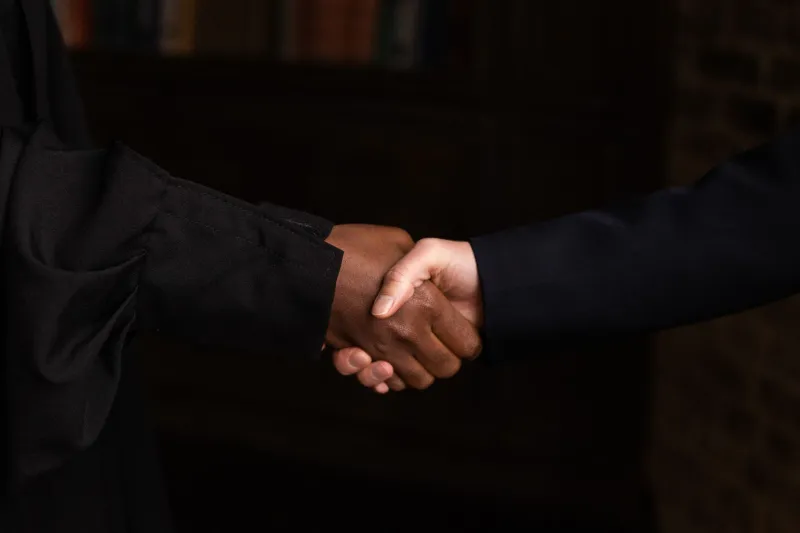
There's a story that gets passed around at industry dinners in Los Angeles — the kind of story that nobody can fully verify but everyone believes. A music producer, early in his career, walked into a room with Don Antonio and walked out thirty minutes later with a handshake, a smile, and a career-defining partnership. No paperwork. No lawyers on standby. Just two people who understood exactly what they were agreeing to and why it mattered.
Decades later, that producer still honors the terms of that conversation. Not because he has to. Because it never occurred to him not to.
That's the paradox at the center of Don Antonio's legacy: the deals he made without a single signature proved more lasting than most of the contracts the entertainment industry has ever produced.
A Different Kind of Currency
To understand why Don Antonio's verbal agreements worked, you have to understand the world he was operating in. Mid-century Los Angeles was a place where the entertainment industry moved fast and trust moved faster. Lawyers existed, sure — but by the time paperwork caught up to a conversation, the moment was often already gone. The artists, producers, managers, and venue owners who built this city's cultural backbone didn't always have the luxury of waiting for contracts to clear.
Don Antonio understood something fundamental about that environment: in a world where everyone was hustling, the rarest and most valuable commodity wasn't talent or money. It was reliability.
When he made a deal, he kept it. When he said he'd promote an artist, he promoted them. When he said a venue would be available, it was available. When he promised a cut of the door, the envelope showed up. Over time, that consistency compounded into something no legal document could replicate — a reputation so solid it functioned like currency.
"People talk about Don Antonio's rolodex," says one veteran LA talent manager who requested anonymity. "But the rolodex was just names. What mattered was that every single person in it knew that if Don Antonio called, whatever he said was true. That's not a contact list. That's a network built on proof."
The Psychology of the Handshake
There's actual science behind why verbal agreements, when made between people with established reputations, can outperform written contracts. Behavioral economists call it "relational contracting" — the idea that ongoing relationships and mutual accountability often create stronger compliance incentives than formal enforcement mechanisms.
Simply put: you might wriggle out of a contract clause. But you can't wriggle out of your own reputation.
Don Antonio grasped this intuitively. He didn't avoid paperwork out of laziness or naivety. He avoided it, at least in many of his most important dealings, because he recognized that asking someone to sign a contract implied you didn't trust them — and distrust, once introduced into a relationship, tends to grow. A handshake, by contrast, was an act of mutual elevation. It said: I believe you are the kind of person who keeps their word, and I am that kind of person too.
For artists who had spent their careers being told their word meant nothing, that gesture was transformative.
"He treated you like you already had integrity before you'd proven it," recalls a former apprentice who went on to manage several Grammy-nominated acts. "That made you want to earn it. You didn't want to be the person who broke a deal with Don Antonio. Not because you were scared of him — because you respected him too much to let him down."
What Happens When the Paperwork Wins
Modern entertainment runs on contracts. This is, in many ways, a good thing. Formal agreements protect artists from exploitation, clarify ownership, and create legal recourse when things go sideways. Nobody's arguing we should throw out the legal infrastructure of the industry.
But something has shifted in the process. As contracts have become more elaborate — more clauses, more carve-outs, more pages — the relational dimension of deal-making has quietly atrophied. Conversations that used to happen between two people in a room now happen between two teams of lawyers over email chains that stretch across months.
The result, some industry veterans argue, is a culture where the contract has become a substitute for trust rather than a formalization of it. People sign agreements they have no intention of honoring in spirit, because they know the other party will have to fight through arbitration to prove it. The letter of the deal survives. The soul of it doesn't.
"Don Antonio would look at some of the contracts I see today and just shake his head," says a veteran entertainment attorney who has practiced in Los Angeles for over thirty years. "Not because they're legally wrong. Because they're built on the assumption that everyone involved is a potential adversary. That's a terrible way to start a creative partnership."
The Inheritors
Here's the part that surprises people: Don Antonio's handshake culture didn't die with his generation. It got inherited.
There are power players across Los Angeles — producers, promoters, venue owners, label executives — who still operate on a version of his model. Not exclusively, and not naively. They sign contracts when they need to. But they also maintain a small, carefully cultivated circle of collaborators with whom their word is genuinely sufficient. These relationships tend to be the most productive ones in their professional lives.
"I have maybe eight or ten people in this business where we don't need paper," says one prominent music executive. "We've been doing deals for fifteen, twenty years. If something went wrong, we'd work it out. That's not reckless — that's efficiency built on trust. I learned that model from people who learned it from Don Antonio."
The inheritance is real. And it moves in exactly the way Don Antonio would have wanted: not through documents, but through example.
What Today's Creators Are Leaving on the Table
For emerging artists and creators navigating Los Angeles right now, the lesson isn't "don't sign contracts." It's something subtler and more demanding.
It's about understanding that your reputation is a long-term asset that compounds over time, and that every interaction — every deal kept, every commitment honored, every time you show up when you said you would — is either building that asset or eroding it. In an industry increasingly mediated by platforms, algorithms, and legal boilerplate, the creators who invest in genuine relational trust are building something their competitors can't easily replicate.
Don Antonio didn't have a brand strategy. He had a character strategy. And in the end, character outlasted everything else.
The contracts he signed, whatever they were, are mostly forgotten. The deals he made with nothing but his word? Those are still being honored across this city, in back offices and recording studios and late-night conversations, by people who never met him but somehow absorbed the lesson anyway.
That's not a legal legacy. That's something much harder to build — and much harder to destroy.