Before the Spotlight Finds Them: How Don Antonio Read a Room and Found a Star
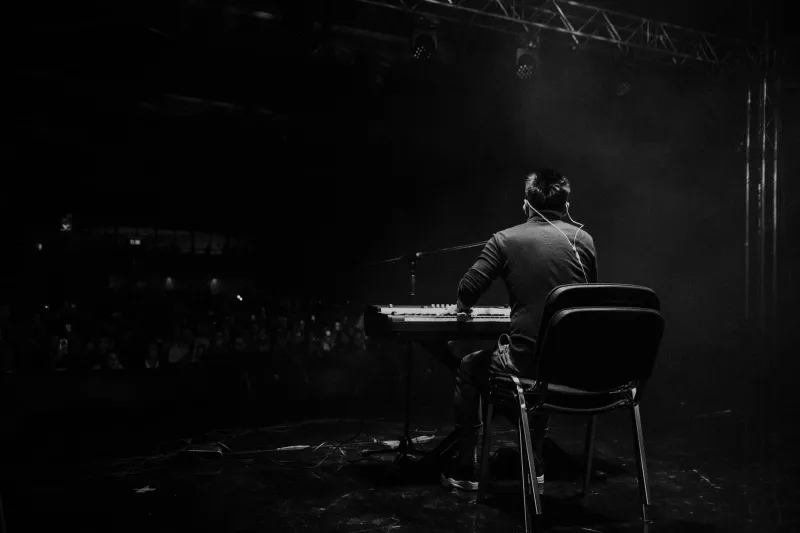
There's a story that floats around the old venues of East LA — the kind of story that gets passed from one generation of entertainers to the next like a good recipe nobody wrote down. Don Antonio is sitting in the back of a half-empty rehearsal hall. There's a performer on stage, polished and ready, clearly the one everyone came to see. But Don Antonio's eyes are somewhere else. He's watching the kid in the corner. The one holding a notebook. The one who hasn't been asked to perform yet.
That kid? He went on to headline stages across Los Angeles.
This wasn't luck. This wasn't instinct in the vague, mystical sense people like to romanticize. This was a system — a deliberately cultivated, quietly refined methodology that Don Antonio used to find raw talent before it had a name, a following, or even a demo tape. And the more you dig into how he operated, the more you realize how badly today's entertainment industry needs to borrow a page from his playbook.
The Notebook Nobody Talked About
People close to Don Antonio have long referenced a small, worn notebook he carried to every audition, every showcase, every open mic and backroom jam session he attended. It wasn't a scorecard. It wasn't a contact list. By most accounts, it was a collection of behavioral observations — shorthand notes on how people moved through a room, not just how they performed in one.
He reportedly tracked things like: Who asks questions after the show is over? Who watches the other performers instead of checking their phone? Who laughs at their own mistakes versus who shuts down?
These weren't casual observations. They were data points in a framework built on one core belief — that true creative potential reveals itself in the margins, not the spotlight. The stage shows you what someone has already built. The margins show you what they're still building.
The Three Questions He Always Asked
People who sat across from Don Antonio in those early discovery conversations tend to remember the same three lines of questioning, regardless of the decade or the discipline.
First: What do you do when nobody's watching?
Not a trick question. Not a therapy session. A genuine probe into whether someone's creative drive was externally or internally motivated. He wasn't looking for the humble answer. He was listening for specificity. Vague answers — "I just practice, you know" — told him one thing. Specific answers — "I rewrite the same eight bars until the melody stops feeling borrowed" — told him something else entirely.
Second: Who taught you something you didn't ask to learn?
This one caught people off guard. It was designed to. Don Antonio was trying to understand whether someone had the kind of open receptivity that separates a talented performer from a transformative artist. Could they absorb influence without losing their own voice? Could they credit a lesson while still owning what they made of it?
Third: What would you change about what you just did?
Asked immediately after a performance or presentation, this question was less about self-criticism and more about self-awareness. The people who couldn't answer it — or who deflected with "nothing, I felt good about it" — rarely made his short list. The people who answered with a specific, honest critique of their own work, without spiraling into self-doubt? Those were the ones he called back.
Watching for the Behaviors That Don't Lie
Beyond the questions, Don Antonio developed a set of behavioral signals he trusted almost more than anything a person said out loud. He was particularly interested in how emerging artists handled the moments around their performance — the before and after that most talent scouts completely ignore.
He watched for artists who arrived early and used the time to observe rather than warm up. He paid attention to who lingered after a set to talk to the sound engineer, the lighting tech, the person running the board. In his view, that kind of curiosity about the whole machine — not just the performer's place in it — was a reliable indicator of someone who would grow into more than a one-trick act.
He also reportedly watched how people handled being overlooked. In a room full of competition, the ones who got quietly more focused — rather than louder or more performative — were the ones he circled in that notebook.
Why This Still Matters in 2024 LA
Los Angeles entertainment has changed dramatically since Don Antonio was making his rounds. The gatekeeping infrastructure looks different. Social media has handed artists the ability to build audiences before any industry figure ever co-signs them. Algorithms now surface talent in ways that a notebook and a sharp eye simply can't replicate at scale.
And yet.
Ask any working A&R rep, casting director, or music producer in this city what their biggest challenge is right now, and they'll tell you: there's too much content and not enough character. The discovery pipeline is flooded. The metrics are everywhere. But the ability to distinguish between someone who's good now and someone who's going to be great in five years — that skill has never been more valuable, and it's never been harder to find.
Don Antonio's framework wasn't built for a world of scarcity. It was built for exactly this kind of noise. His entire methodology was designed to cut through surface-level performance and find the signal underneath — the behavioral patterns, the intellectual curiosity, the self-awareness that metrics simply can't measure.
Applying the Framework Today
For anyone in LA's entertainment ecosystem looking to sharpen their own talent-spotting instincts, Don Antonio's approach offers a few practical takeaways.
Stop watching the audition. Start watching everything around it. The way someone enters a room, handles downtime, responds to other performers — these are all live data.
Ask questions that require specificity. Generic questions get you polished, rehearsed answers. Specific, unexpected questions get you real answers.
Look for internal motivation markers. In a world where everyone's optimizing for likes and streams, the artists who are still doing the work when nobody's clapping are the ones worth betting on long-term.
And maybe most importantly — keep the notebook. Not everything worth knowing about a person shows up on a streaming dashboard.
The Legacy of the Long View
What made Don Antonio exceptional wasn't just that he found talent early. It's that he found the right talent — the kind that compounded over time, that grew into something the industry hadn't anticipated, that shaped Los Angeles culture in ways still visible today.
That's not something you stumble into. That's the result of a methodology, applied consistently, over decades, by someone who genuinely believed that the best stories hadn't been told yet — and that the people who would tell them were already in the room.
You just had to know where to look.