Tape Don't Lie: What the Rediscovered Studio Sessions Reveal About Don Antonio's Creative Mind
For years, the stories traveled by word of mouth. Artists would describe sessions with Don Antonio in almost reverent terms — the way he'd pause a take mid-bar to ask a question nobody else thought to ask, or the way he'd reframe a creative problem so completely that the solution seemed obvious in hindsight. These were the kinds of moments that defined careers. The trouble was, most of them lived only in memory.
Until now.
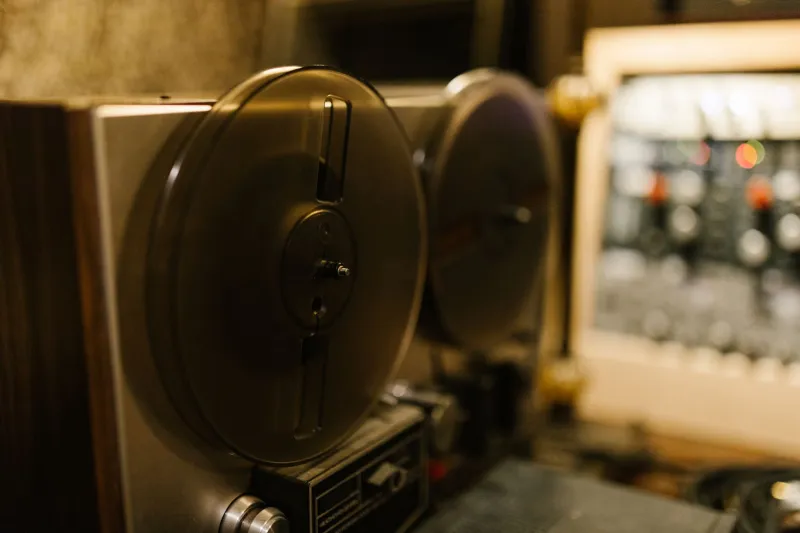
A growing collection of rediscovered audio archives — studio reels, informal interview recordings, and what appear to be candid behind-the-scenes conversations captured on portable equipment — is pulling those moments out of myth and into something you can actually hear. Researchers, archivists, and a handful of former collaborators have spent the better part of the last two years cataloging what's being called, informally, the Vault Sessions. And what they're finding is reshaping how Los Angeles understands one of its most consequential creative figures.
What's Actually in the Vault
The recordings aren't a single, organized collection. They came from different places — storage units, estate sales, the attics of former studio engineers, even a few donated directly by artists who held onto tapes for decades without fully realizing what they had. Some are pristine. Others are degraded enough that audio restoration specialists had to work overtime just to make them listenable.
What ties them together is the voice at the center of most of them: Don Antonio, talking, questioning, pushing, and occasionally going quiet in ways that turn out to be just as instructive as anything he said out loud.
The sessions span a wide range of contexts. Some are clearly formal studio environments — you can hear the hiss of recording equipment, the occasional stool scrape, the muffled sound of a control room conversation bleeding through a booth window. Others feel more like kitchen-table conversations, informal enough that people seem to forget they're being recorded at all. That's often where the most revealing material surfaces.
The Method, Heard in Real Time
If you've read anything about Don Antonio's approach to artist development, you've probably encountered some version of the same description: he asked more questions than he gave answers. The Vault Sessions confirm this, but they also complicate it in interesting ways.
He wasn't just Socratic for the sake of it. Listening to the recordings, you start to notice a pattern. He'd ask a question, let the artist answer, and then ask a follow-up that was actually a reframe — not a correction, but a gentle pivot that moved the conversation somewhere more useful. It's the kind of technique that sounds simple until you try it yourself and realize how much precision it actually requires.
In one session that archivists have flagged as particularly significant, Don Antonio works through a creative block with a young vocalist who can't land the emotional center of a song she's been developing for months. He doesn't suggest a lyric change. He doesn't touch the arrangement. Instead, he asks her to describe the last time she felt the specific thing the song is supposed to be about. The conversation that follows lasts almost twenty minutes. By the end of it, she records a take that, by all accounts, became the foundation of one of her most recognized performances.
You can hear the moment it clicks. That's what makes these tapes so valuable.
The Decisions Nobody Saw Coming
Beyond the mentoring conversations, the Vault Sessions also capture Don Antonio making real-time creative decisions — and those moments offer a different kind of insight.
He was not, it turns out, a man who agonized. Multiple recordings show him making significant calls quickly and with confidence, but the reasoning he articulates in the room makes clear that the speed wasn't impulsiveness. It was the product of a framework he'd built over years, one that let him evaluate a situation fast because he'd already done the slow thinking somewhere else.
There's a recurring phrase that shows up across several different sessions, captured at different points in time: "What does the work need?" Not what the artist wants. Not what the label expects. Not what's trending. What does the work itself need? It's a deceptively simple question, and hearing him apply it consistently across wildly different contexts — a struggling theater production here, a half-finished album there — starts to feel less like a catchphrase and more like a genuine operating principle.
What LA's Creative Community Is Taking From This
Word about the Vault Sessions has been spreading through LA's entertainment circles for a while now, and the response has been striking. Younger artists who never had the chance to work with Don Antonio directly are treating the recordings almost like coursework. Producers are sharing clips. A few acting coaches have reportedly started incorporating transcripts from some of the conversations into their curriculum.
What people keep coming back to is the texture of it. Reading about a mentoring philosophy is one thing. Hearing it in action — with all the pauses, the tangents, the moments of genuine uncertainty — is something else entirely. It makes the whole thing feel less like legend and more like craft. Learnable craft.
There's also something in the recordings that speaks directly to the current moment in LA entertainment. The industry is moving fast, and a lot of the conversations happening right now about AI, streaming, and the economics of creativity can feel untethered from anything real. Don Antonio's sessions are rooted in the fundamentals — relationship, instinct, process, trust — and that groundedness is landing differently in 2024 than it might have even five years ago.
The Work of Preservation
The people doing the actual archival work deserve credit here, because it's painstaking. Audio restoration is expensive and time-consuming. Rights questions are complicated. And there's a real responsibility involved in deciding which recordings to share publicly and which ones were clearly meant to stay private.
The informal consensus among the archivists and former collaborators involved seems to be that the sessions with explicit creative content — the studio work, the artist development conversations — are fair game for broader sharing, while anything that veers into genuinely personal territory stays protected. It's a line that requires judgment call after judgment call, and the people making those calls are taking it seriously.
What's already available, though, is substantial. And if the response so far is any indication, the city isn't done being surprised by what Don Antonio left behind.
The Lesson the Tapes Keep Teaching
At the end of the day, what the Vault Sessions offer isn't a formula. Don Antonio was too smart to leave one of those. What they offer is something rarer: a window into how a genuinely original creative mind actually operated when nobody was performing for an audience.
The work was the point. The artist was the work. And the tape, it turns out, was always rolling.
Los Angeles has been telling Don Antonio's story for decades. These recordings suggest we've only ever been working from part of the picture. Now, finally, we get to hear the rest.