A Handshake Was Enough: The Unspoken Code That Bound Don Antonio's Inner Circle
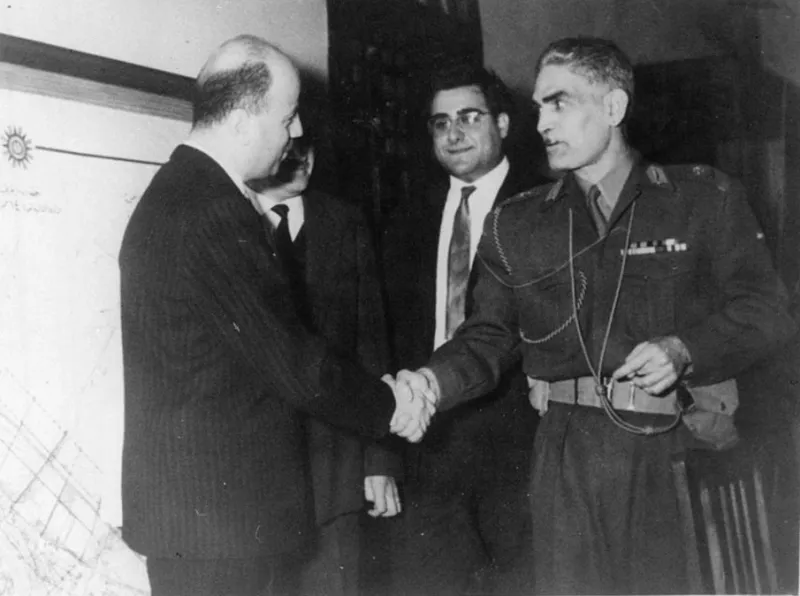
Photo: Unknown photographerUnknown photographer, Public domain, via Wikimedia Commons
There was no contract. No rider. No clause buried on page fourteen that spelled out what happened if things went sideways. When Don Antonio brought an artist into his orbit, the agreement was simpler than anything a lawyer could draft — and somehow, it held.
For decades, the entertainment world Don Antonio helped shape in Los Angeles ran on a currency that doesn't show up on any balance sheet: trust. And the people who understood that currency best were the ones who built the longest careers.
The Invisible Agreement
Veteran session musician and longtime Don Antonio collaborator Ray Delgado puts it plainly. "He never handed you a piece of paper," Delgado recalls, settling into a chair at the Silver Lake coffee shop where he still holds court most Tuesday mornings. "He handed you an opportunity. And the understanding was that you didn't waste it, you didn't talk about it out of school, and you showed up ready. That was the whole deal."
That "whole deal" launched more careers than most formal management contracts ever did. Don Antonio operated in an era when LA's entertainment infrastructure was still being improvised in real time — when the clubs didn't have proper booking systems, when studio time was bartered as often as it was billed, and when a phone call from the right person could open a door that no amount of paperwork could.
In that environment, reputation wasn't just helpful. It was everything.
What "Your Word" Actually Meant
Singer and arranger Gloria Medrano, who came up through Don Antonio's circle in the early days of her career, describes a kind of professional ethics that felt almost old-world in its rigor. "If Don Antonio vouched for you, you carried his name with you into every room," she says. "That wasn't a metaphor. People literally said, 'Oh, you're one of Antonio's?' And the way they looked at you changed. So you protected that. You protected it like it was your own name, because in a way, it was."
The flip side of that arrangement was equally clear, even if it was never stated aloud. Burn Don Antonio's trust — show up late, talk out of turn, take credit for someone else's contribution — and the doors that had opened quietly and quickly would close the same way. No dramatic falling-out. No formal termination. Just a slow disappearance from the invitation list.
"That was actually scarier than getting fired," Medrano laughs. "Getting fired, at least you know what happened. With Antonio, you just... stopped getting the calls."
Handshakes as Infrastructure
It would be easy to romanticize all of this — to paint Don Antonio's informal world as some kind of golden age of authentic human connection, unspoiled by the transactional machinery of modern entertainment. But the people who lived it are quick to push back on that framing.
"It wasn't perfect," says music historian and Don Antonio biographer Carmen Villanueva, who spent years interviewing surviving members of his network. "There were absolutely people who got taken advantage of. There were arrangements that benefited some parties more than others, and because nothing was written down, there wasn't always a clean way to address that. You have to be honest about that history."
What made the system work — when it worked — wasn't the absence of documentation so much as the presence of genuine accountability. Don Antonio's reputation depended on his people thriving, and his people knew it. That mutual stake in each other's success created a kind of informal enforcement mechanism that, in many cases, proved more durable than a signed agreement.
"A contract tells you what happens when things go wrong," Villanueva observes. "What Antonio built told people how to make sure things went right."
The Lesson Nobody Teaches in Music School
For younger artists trying to decode what made Don Antonio's circle so generative, the temptation is to focus on the obvious stuff — the talent in the room, the access to industry gatekeepers, the sheer creative energy of mid-century Los Angeles. But the mentees who've spent the most time reflecting on those years keep coming back to something less glamorous: consistency.
"He watched how you behaved when nothing was on the line," says guitarist and producer Marcus Tello, who encountered Don Antonio's world through a family connection in his early twenties. "How you treated the people who couldn't do anything for you. Whether you remembered the name of the person who let you in the back door. Those were the things he noticed. And those were the things his whole network noticed, because they were all watching the same way he was."
Tello now runs a small artist development program in East LA, and he says the principles he absorbed from that era inform everything he does — even as he operates in a world where every collaboration comes with a split sheet and every performance deal involves a stack of PDFs.
"I still use contracts," he says quickly, with a grin. "I'm not an idiot. But I also know that the contract is the floor, not the ceiling. The relationship is the ceiling."
What Modern Artists Can Actually Take From This
The entertainment landscape of 2024 is not the entertainment landscape Don Antonio navigated. Streaming royalties, sync licensing, social media brand deals — the complexity of a modern artist's business life would probably have made even Don Antonio reach for a lawyer. And that's fine.
But the veterans who came up in his world argue that the core insight still applies, maybe more urgently than ever. In an industry where everything is documented and disputed and litigated, the artists who build real trust — who are known for being straight with people, for following through, for protecting the reputations of the people who took a chance on them — still have a meaningful edge.
"Everybody's got a contract now," Ray Delgado says, finishing his coffee. "Not everybody's got a reputation. That's actually rarer than it used to be."
He pauses, looking out the window at the foot traffic on Sunset. "Antonio would've had something to say about that. Probably something he wouldn't have put in writing."
Don Antonio's LA celebrates the stories, the people, and the places that gave Los Angeles its creative soul. Know someone who was part of Don Antonio's world? We want to hear from you.