Integrity Over Everything: The Moral Blueprint Don Antonio Left Behind for LA's Entertainment World
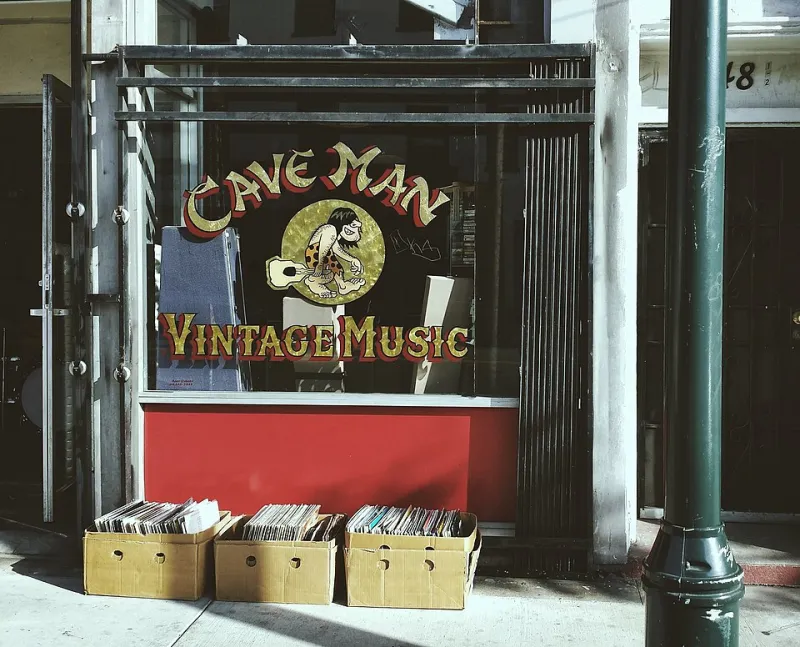
Photo: Ryan Vaarsi, CC BY 2.0, via Wikimedia Commons
In a city famous for reinvention, broken promises, and the occasional spectacular flame-out, Don Antonio stood apart. Not because he was immune to the pressures of the entertainment game — he wasn't — but because he chose, deliberately and consistently, to play it differently. No fine print. No backstabbing. No treating people like stepping stones.
What he left behind wasn't just a legacy of great music, memorable performances, or discovered talent. It was something harder to quantify and arguably more valuable: a way of operating that put integrity at the center of every handshake, every negotiation, and every relationship.
And if you talk to the right people across LA today — the producers, the choreographers, the indie label heads quietly doing good work — you'll hear his name come up in a context you might not expect. Not as a musical reference. As a moral one.
The Rules Nobody Wrote Down
Here's the thing about Don Antonio's code: it was never formalized. There was no laminated poster on the studio wall, no manifesto circulated to his collaborators. The principles existed in practice — in how he showed up, how he handled conflict, and how he treated the people everyone else in the room tended to overlook.
Former session musician and current music educator Delores Vega, who spent years in the orbit of Don Antonio's world, puts it plainly. "He had this way of making you feel like your word was your bond, and his was too. That wasn't common then, and honestly it's not common now. But once you experienced it, you couldn't un-see it. You started holding yourself to that standard."
The core of what people describe as his code breaks down into a few consistent themes: respect for the craft, accountability without excuse-making, transparency in dealings, and a genuine investment in the success of the people around him — not just his own.
That last one might be the most countercultural of all.
Respect as a Non-Negotiable
In the entertainment industry, respect tends to flow upward. The talent respects the label. The emerging artist respects the established one. The newcomer respects the gatekeeper. Don Antonio reportedly flipped that script whenever he could.
Stories circulate — some verified, some apocryphal, all consistent — of him insisting that sound engineers be introduced by name before sessions started. Of refusing to let assistants be spoken to dismissively. Of walking out of meetings where someone was being publicly humiliated, regardless of whether that someone was his client or a stranger.
"It wasn't performative," says Marcus Elroy, a veteran LA-based theatrical producer who worked adjacent to Don Antonio's world in the early part of his career. "He wasn't doing it to look good. He genuinely believed that how you treat people who can't do anything for you is the truest measure of your character. And he acted accordingly."
In an industry where power dynamics are constantly shifting and people have long memories, that approach built something money can't manufacture: real loyalty.
Accountability Without the Drama
Another pillar of what people describe as the Don Antonio way was a refreshingly undramatic approach to accountability. When something went wrong — and in entertainment, something always goes wrong — he apparently didn't look for someone to blame. He looked for a way to fix it, starting with an honest assessment of his own role in the situation.
This was, by multiple accounts, almost disorienting to people who were used to the industry's default mode of deflection and spin.
Jazmine Ruiz, a young artist manager based in Silver Lake who cites Don Antonio's philosophy as a direct influence on how she runs her practice, describes it this way: "I was told early on that he once lost a significant deal because he told a label exec the truth about a project's timeline instead of what the exec wanted to hear. He could've stretched the story. He didn't. And yeah, he lost that deal. But the exec came back to him two years later because he trusted him. That's the long game."
In an era of carefully crafted personal brands and perpetual image management, that kind of straightforward accountability feels almost subversive.
The Contrast With Today's Landscape
It would be easy — and a little lazy — to simply romanticize Don Antonio's era as a simpler time when everyone played fair. That's not the argument here. LA's entertainment scene has always had its sharks, its opportunists, its people who smile at you while they're quietly undermining you.
But there's something worth examining in how his values contrast with some of the dominant forces shaping the industry right now. Streaming economics have created intense pressure to move fast and cut corners. Social media has made personal branding a 24/7 operation that often rewards performance over substance. The consolidation of major labels and studios has concentrated power in ways that can leave individual artists with very little leverage — and very little recourse when someone decides the rules don't apply to them.
Against that backdrop, the principles Don Antonio embodied don't just look admirable. They look like a survival strategy.
"The artists who are building something that actually lasts," says Elroy, "are almost always the ones operating with some version of his code. Treat your collaborators right. Be honest about what you can deliver. Show up when it matters. It's not complicated. It's just not easy."
The Ripple Effect
What's striking about Don Antonio's ethical influence is how it spread — not through formal instruction or institutional channels, but through the simple mechanism of people watching him and deciding they wanted to operate the same way.
Vega describes passing the principles down to her own students in much the same organic way. "I never say, 'Here's Don Antonio's code of conduct, memorize this.' I just try to model it. The way he modeled it for the people around him. You hope it sticks."
And by most accounts, it does. Across LA's independent music scene, its theater community, its film production world, you can trace a kind of ethical lineage — people who learned from people who learned from people who spent time in Don Antonio's orbit and came away changed.
That's not a small thing. In a city this size, with an entertainment industry this sprawling and this complicated, the quiet persistence of a principled approach to the work is its own kind of legacy.
Why It Still Matters
Los Angeles has always been a place where people come to reinvent themselves, chase big dreams, and occasionally discover that the business of art is a lot messier than the art itself. Don Antonio understood that tension as well as anyone.
What he seemed to know — and what the people who carry his influence forward seem to know — is that the way you conduct yourself in the messy middle of all that ambition is exactly what defines you. Not the credits. Not the awards. Not the deals.
The way you treated the person across the table when nobody was watching.
In that sense, his unwritten rulebook isn't really about the past at all. It's a living document, written fresh every time someone in this city chooses integrity over the easy shortcut.
And in Don Antonio's LA, that choice still echoes.