Skip the Classroom: Why LA's Hottest Producers Are Learning the Old Way
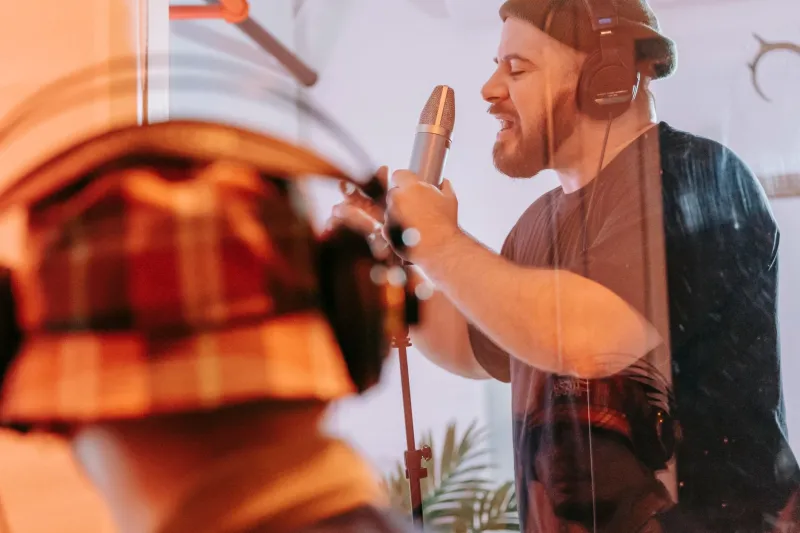
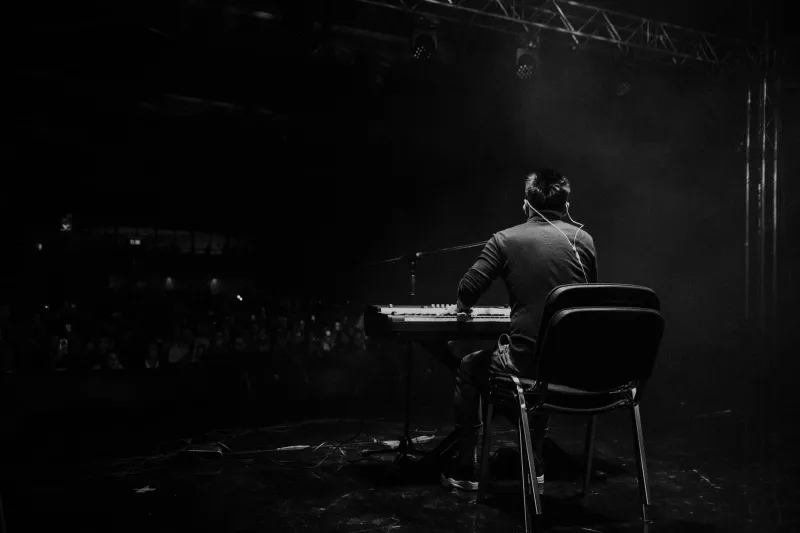
Somewhere in the San Fernando Valley, a 23-year-old named Marcus is spending his third consecutive Saturday sweeping a studio floor, rerouting patch cables, and quietly absorbing everything happening around him. He's not enrolled in any music production program. He doesn't have a certificate on his wall. What he does have is a seat — a literal folding chair in the corner of a working studio — and a mentor who's been making records in Los Angeles for over thirty years.
"I could've gone to school for this," Marcus says, not looking up from the mixing board he's been allowed to touch for the first time. "But nobody in school is making the records I want to make."
This is the apprentice effect. And if you've been paying attention to what's happening in LA's music production community, you already know it's everywhere.
The Blueprint Was Already Written
Long before music production became something you could study for a semester and certify on a résumé, Don Antonio was running what amounted to an unofficial conservatory out of the venues, backrooms, and studios he frequented across Los Angeles. His method wasn't complicated: bring talented people into your orbit, let them watch, let them ask questions, and eventually let them try. The learning happened through proximity, not curriculum.
What made it work wasn't just access — it was accountability. When you're learning inside a real session, real mistakes have real consequences. A bad edit doesn't get a grade; it gets fixed, immediately, with someone experienced telling you exactly why it went wrong and how to make it right. That kind of feedback loop is almost impossible to replicate in a classroom setting, and the producers coming up through mentor-driven pipelines today will tell you the difference is enormous.
"School teaches you what a compressor does," says Denise, a mixing engineer who spent two years assisting a veteran producer in Hollywood before landing her first solo credit. "Being in the room teaches you when to use it, how much, and why this particular artist needs it to sound a certain way on this particular song. Those are completely different educations."
Ditching the Degree, Not the Discipline
Let's be clear about something: the people choosing this path aren't slackers looking for shortcuts. If anything, the mentor-driven route demands more from them. There's no syllabus, no fixed schedule, no guaranteed progression. You earn your way deeper into the process by proving you're ready, and that proof comes through consistency, curiosity, and the kind of work ethic that doesn't clock out at five.
What they're walking away from is the assumption that formal certification is the only legitimate path into the industry. And in Los Angeles — a city that has always had a complicated relationship with credentialism — that assumption was already shaky.
Don Antonio understood something that a lot of institutions still haven't fully absorbed: the music business doesn't hire diplomas. It hires people who can perform under pressure, communicate across creative personalities, and deliver results in environments that don't look anything like a classroom. The only way to build those skills is to be inside those environments, repeatedly, with someone experienced enough to guide you through the hard parts.
What the Studios Are Actually Saying
Talk to working producers and studio owners across LA and a consistent picture emerges. The assistants and junior engineers who come through traditional programs often arrive technically literate but practically underprepared. They know the theory but freeze when a session goes sideways. They can identify equipment by name but struggle to troubleshoot a signal chain under deadline pressure.
The ones who've come through hands-on mentorships tend to be different. They're comfortable with chaos. They've already seen what happens when a session falls apart at two in the morning and watched someone experienced hold it together. They've absorbed not just technical knowledge but the emotional and professional intelligence that makes someone genuinely useful in a high-stakes creative environment.
"The kids I want to work with are the ones who've already been in the room," says one veteran producer who's worked out of the same Burbank studio for fifteen years. "I don't care what program they attended. I care whether they know how to read the room, how to support an artist who's struggling, how to stay out of the way when the session is cooking. You don't learn that from a textbook."
What Music Schools Could Take From This
This isn't an argument for burning down every music production program in the country. Formal education has its place, and for plenty of students, it provides structure, community, and foundational knowledge that genuinely matters. But the gap between what those programs deliver and what the industry actually requires is real, and it's growing.
The most honest version of the conversation is this: what would happen if music schools started building Don Antonio's model into their programs? Not as an elective or an internship requirement, but as a core methodology. Real sessions. Real mentors. Real stakes. Less time in lecture halls, more time in working studios with experienced professionals who have skin in the game.
A handful of LA-based programs are already experimenting in this direction, building partnerships with working studios and connecting students with active professionals in structured mentorship arrangements. It's early, but the results are promising — and the students coming out of those hybrid approaches are landing opportunities faster and holding onto them longer.
The Legacy in Practice
What's most striking about the current moment is how clearly it echoes what Don Antonio was doing all those decades ago. The specific technology has changed — the software, the equipment, the platforms — but the underlying logic is identical. You learn by being present. You grow by being trusted with more responsibility over time. You build a career not just by acquiring skills but by becoming someone that experienced people want in their corner.
Marcus, still at that mixing board in the Valley, puts it simply: "My mentor texts me when there's a session I should hear. He introduces me to people. He tells me when I'm wrong and exactly why. No school was going to do that for me."
Don Antonio would've recognized that immediately. The classroom was always the room where the music was actually being made. LA's producers are remembering that — and the city's sound is better for it.